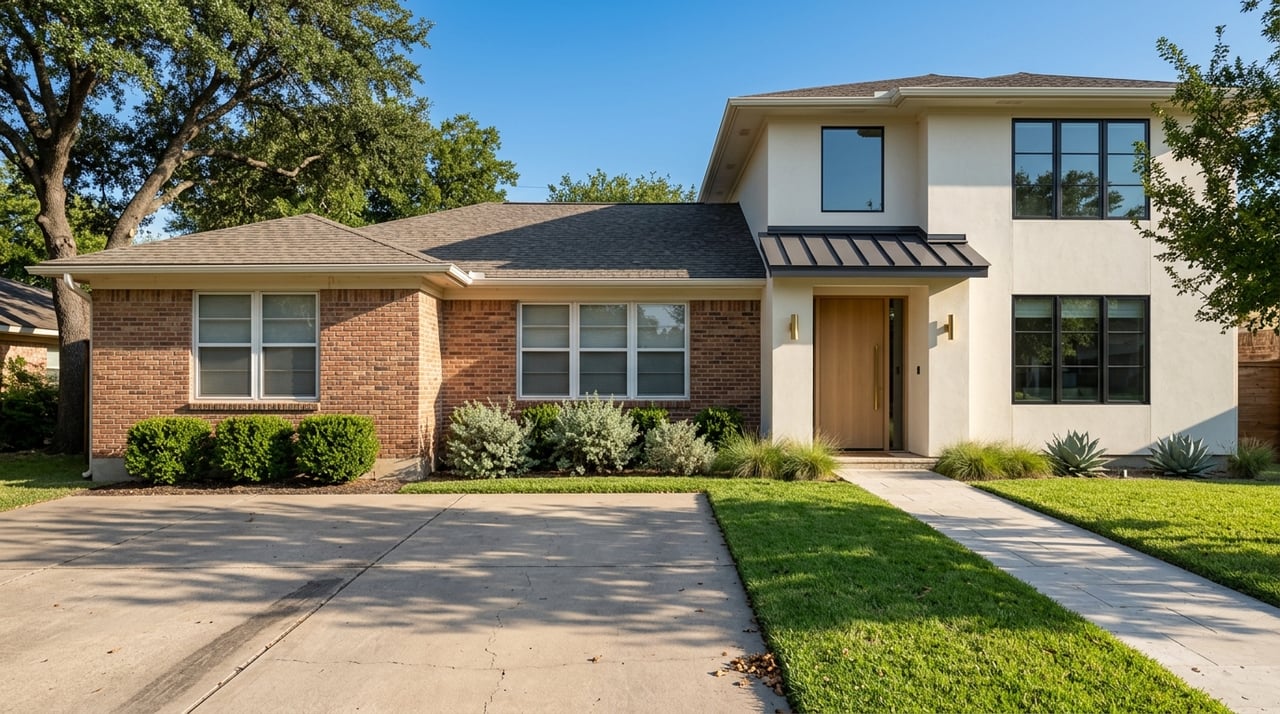
Trying to decide whether to tear down or renovate your Brookhaven home? That choice can affect your budget, timeline, and resale outcome more than almost any other property decision. If you own an older home in Farmers Branch, you need more than a gut feeling. You need a clear look at lot value, neighborhood comps, local approvals, and real project risk. Let’s dive in.
Brookhaven homes need a case-by-case review
In Brookhaven, the answer is not always obvious. Nearby listings show a wide mix of home ages, sizes, and lot dimensions, including homes built in 1960, 1967, 1974, and even a 2009 replacement home on a larger lot, according to Brookhaven-area listing examples. That kind of variety is exactly why one property may make sense to renovate while another may support a rebuild.
You also need to be careful with how comps are chosen. Some nearby homes may have a Dallas mailing address but still align more closely with the Carrollton or Farmers Branch market area. In practice, subdivision, lot size, and build quality often matter more than postal city alone.
Start with the numbers
Before you choose a renovation or teardown, compare three values side by side:
- As-is value
- Realistic renovated resale value
- Realistic rebuilt resale value
This simple framework helps you avoid making an emotional decision based only on the age of the house. An older home on a strong lot may still be a good renovation candidate. On the other hand, a home with a hard-to-fix layout or major functional issues may point toward rebuilding.
Farmers Branch market data show why discipline matters. The Dallas Central Appraisal District 2025 average market value report lists the average market value for detached single-family homes in Farmers Branch at $452,788. At the same time, the research report notes NTREIS reported a March 2025 median single-family sale price of $390,000, with 2.6 months of inventory and a 96.7% sold-to-list ratio, while Redfin's February 2026 city page placed the median sale price at $400,000 and described the market as somewhat competitive.
These figures measure different things, so they should not be treated as interchangeable. Still, together they suggest a market where the right property can sell well, but over-improving without a clear resale path can create risk.
When renovation may make more sense
A renovation is often the better path when the lot is attractive, the structure is still fundamentally sound, and the home can be updated without replacing most of the building envelope. If your goal is to improve function, refresh finishes, and bring the home closer to current neighborhood expectations, a targeted renovation may offer a lower-risk path.
This can be especially true in Brookhaven, where many homes date back to the 1960s and 1970s. Some properties may only need a smarter layout, updated systems, or cosmetic improvements to compete better in the market. If the existing house already fits the lot well and the improvement cost stays in line with likely resale value, renovation can preserve equity and reduce complexity.
When a teardown may be worth exploring
A teardown and rebuild becomes more plausible when the house is functionally obsolete or very difficult to improve efficiently. If the floor plan does not work, the systems are aging, and the cost to modernize approaches the cost of starting over, rebuilding may deserve serious review.
The rebuild case gets stronger when the land carries a large share of the property’s value. You can start that analysis through the Dallas Central Appraisal District property search tool, which allows you to search by address or owner name and review current appraisal information. If lot value is strong and nearby replacement-home comps support a materially more valuable finished product, teardown may move higher on the list.
That said, a large lot alone does not automatically justify demolition. What matters most is what zoning allows, what a replacement home can realistically sell for, and what it will cost to complete the project.
Lot value matters more than house age
One of the biggest mistakes homeowners make is assuming an older house should automatically come down. In Brookhaven, that is too simplistic. The better question is whether the land plus a new build creates more value than the existing home plus a strategic renovation.
That is why hyper-local comps matter so much. Brookhaven examples include lots from roughly 0.248 to 0.421 acres, plus a larger replacement-home site around 0.476 acres, based on the research report’s local listing reference. A quarter-acre lot and a nearly half-acre lot may support very different outcomes, even within the same general area.
Check permits and zoning early
Before you spend too much time on plans, verify what the city will allow. The City of Farmers Branch Building Inspection resources include information tied to building, zoning, property maintenance, demo/rebuild, and minor home repair. The city also lists the Zoning Board of Adjustment and a Specific Use Permits process.
For you, the practical takeaway is simple: check approvals early. Whether you plan a major remodel or a full rebuild, zoning, setbacks, permit requirements, and any needed relief can all affect cost and timing. It is much better to understand those limits before design work gets too far.
Floodplain and drainage can change the math
Physical site risk can quickly reshape your project budget. If your Brookhaven property is near a drainage feature or within a regulated flood area, finished-floor elevations, approvals, and construction costs may all change.
Farmers Branch provides a Floodplain & Drainage page with information on floodplain management, drainage management, flood insurance, and Farmers Branch Creek. Reviewing these factors early can help you avoid expensive surprises, especially if you are leaning toward a rebuild.
Older homes may carry hidden renovation costs
With many Brookhaven-area homes dating to the 1960s and 1970s, renovation costs can rise once walls, windows, or trim are opened up. One key issue is lead-safe renovation requirements for older housing.
The EPA states that 24% of homes built between 1960 and 1978 may contain lead-based paint. For many paid renovation projects that disturb painted surfaces in pre-1978 homes, the EPA’s Lead Renovation, Repair and Painting rule requires lead-safe certified contractors. That means a project that looks cosmetic at first can become more expensive once work begins.
Common mistakes to avoid
Homeowners often run into trouble when they rely on broad city averages instead of Brookhaven-specific data. That can lead to overestimating resale value, underestimating renovation scope, or assuming a teardown is more profitable than it really is.
Here are some of the most common pitfalls:
- Using citywide comps instead of subdivision-level comparisons
- Focusing on house age instead of lot value and resale potential
- Underestimating hidden renovation costs in older homes
- Ignoring zoning, permit, or floodplain issues until late in the process
- Forgetting carrying costs and project timelines
- Assuming a larger lot always supports a profitable rebuild
If demolition happens before the rebuild is complete, site management still matters. The research report notes that Farmers Branch code-enforcement materials include minimum property standards and vacant-building categories, so holding costs and compliance should stay part of the conversation.
A practical way to decide
If you are weighing tear down versus renovation in Brookhaven, it helps to move through the decision in a clear order.
Review your as-is position
Start with your current home value, current lot characteristics, and likely buyer demand for the home in its present condition. This creates your baseline and helps you understand what you are risking by taking on a project.
Study the right comps
Look at Brookhaven-specific sales and listings that match your subdivision, lot size, and product type as closely as possible. In this area, comp quality matters more than quantity.
Estimate renovation realistically
Focus on improvements that can bring the home closer to neighborhood expectations without overspending. If the renovation starts requiring major structural, envelope, or systems replacement, the financial case may shift.
Model a rebuild carefully
Evaluate whether the lot and local market support a replacement home at a price that justifies demolition, construction, carrying time, and approvals. A rebuild should be supported by evidence, not just optimism.
Why local guidance matters
In a neighborhood like Brookhaven, the right decision is rarely just about whether you prefer an old home or a new one. It is about matching the property to the market in a way that protects your equity and supports your long-term goals.
That is where construction-aware, valuation-driven guidance can make a real difference. When you compare as-is value, selective renovation, full remodel, and teardown potential through a local lens, you can make a smarter move with fewer surprises.
If you are thinking about whether to renovate, rebuild, or sell your Brookhaven property as-is, Jessica Cazares can help you evaluate the numbers, the lot potential, and the market strategy that fits your goals.
FAQs
Should you tear down or renovate an older Brookhaven home?
- It depends on the home’s condition, the lot value, neighborhood comps, local zoning, and whether renovation or rebuilding offers the stronger realistic resale outcome.
How do you check lot value for a Brookhaven property in Farmers Branch?
- You can start with the Dallas Central Appraisal District property search to review appraisal information and see whether land value makes up a large share of the property’s overall value.
Do Brookhaven teardown decisions depend on lot size alone?
- No. Lot size matters, but zoning, replacement-home resale potential, build cost, and approval requirements are all critical to the decision.
What city resources should you review before a Brookhaven remodel or rebuild?
- You should review the City of Farmers Branch building and development resources and, if relevant to the site, the city’s Floodplain & Drainage information.
Do older Brookhaven homes have special renovation risks?
- Yes. Many homes in this age range may involve hidden costs, and pre-1978 homes may require lead-safe renovation practices under EPA rules when painted surfaces are disturbed.
