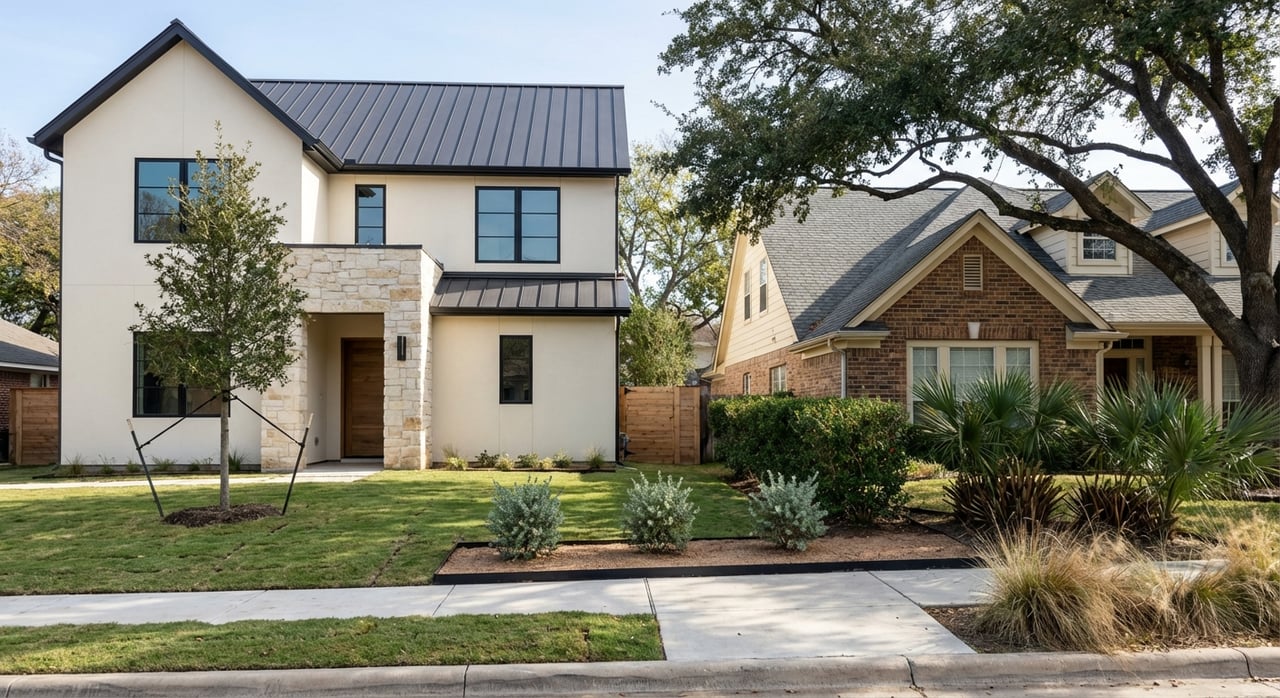
Torn between a shiny new build and a character-filled resale in Frisco? You are not alone. With prices in the mid-600s and a steady stream of jobs and amenities nearby, it is smart to weigh both paths before you decide. In this guide, you will learn how new construction and resale compare on warranties, lot size, amenities, taxes and assessments, HOA rules, builder incentives, and future resale. Let’s dive in.
Market snapshot: Frisco today
Frisco’s typical home values hovered around the mid-600s as of late 2025 and early 2026. Recent estimates place the local typical value near the mid $650,000s at year-end 2025, while median sale prices in January 2026 were roughly in the low $600,000s. Some early 2026 reports showed small year-over-year declines in certain aggregates, but the big picture remains stable.
Demand also ties to local job and entertainment hubs. Proximity to major centers like The Star and Frisco Station helps support buyer interest and resale liquidity. The city’s corporate lifestyle mix continues to be a durable draw for professionals and relocating families, according to the Frisco Economic Development Corporation.
New vs resale: quick take
- New construction: brand-new systems, energy features, and modern layouts with builders offering incentives. You should review the exact warranty terms and any special assessments.
- Resale: mature neighborhoods, often larger lots and established trees, with potential for value plays if you plan light updates. You should inspect for age-related repairs and compare carrying costs.
- Your bottom line: compare net monthly cost, not just price. Include taxes, any PID or MUD assessments, HOA dues, utilities, and realistic maintenance.
Build quality and warranties in Texas
Warranty coverage is a major difference between new and resale. Many builders still use a version of the classic “1-2-10” warranty structure. Texas law changed in 2023 to allow a qualifying “1-2-6” written warranty that shortens the statute of repose to six years for covered homes, effective for qualifying contracts dated on or after June 9, 2023. Always confirm whether your contract uses a 1-2-6 or 1-2-10 structure and how that affects your time window for defect claims. For background, see this legal summary of the updated rules from Peckar & Abramson.
What to do as a buyer:
- Request the full, signed warranty booklet before you sign, plus the name of any third-party administrator.
- Confirm in writing whether structural coverage is 6 or 10 years and whether the warranty is transferable to a later buyer.
- Ask whether your purchase contract triggers the six-year repose period and keep copies of all documents.
- Schedule independent inspections. At minimum, book pre-drywall and pre-close inspections for new builds. Model and inventory homes also deserve full inspections.
Lots and neighborhood design
New master-planned communities often deliver product lines by lot width to hit different price points. It is common to see 50-, 60-, and 70-foot sections, and some master plans market even wider lots. For instance, Phillips Creek Ranch promoted multiple collections such as 55-, 65-, 75-, and 90-foot products in different phases, illustrating how builders tailor layouts by lot size. See typical ranges across area master plans in this local product mix overview.
How that impacts daily life and resale:
- Narrower lots, often 40 to 55 feet, trim exterior maintenance and can lower the entry price, but backyards feel tighter and homes sit closer together.
- Wider lots, 65 to 100 feet or more, cost more upfront and to maintain but can separate you from neighbors, improve pool placement, and strengthen future resale for space-seeking buyers.
- Verify usable backyard dimensions. Do not rely on the marketed lot width alone. Confirm buildable area after easements and setbacks and review section plats.
Amenities and HOA costs
Frisco’s newer master-planned communities often feature “resort-style” amenity hubs. As an example, Richwoods highlights a multi-acre clubhouse and pool complex that anchors the neighborhood’s lifestyle. Explore the amenity profile on the developer’s page for Richwoods.
Those amenities affect HOA dues. Communities with minimal common areas may charge a few hundred dollars per year. Amenity-rich master-planned neighborhoods commonly range around the low to mid hundreds per month. A local overview shows many Frisco communities with dues near $150 to $200 per month, with some gated or full-service sections higher. See a breakdown of typical ranges in this Frisco HOA fee guide.
For new neighborhoods, understand the developer-control period. In Texas, property owners’ association governance is outlined in the Property Code, and turnover timing and election rights are defined by statute and the community’s dedicatory instruments. Review the relevant rules in Texas Property Code Chapter 209 and ask for the HOA budget, reserve study, and turnover schedule during your contract review.
Taxes, PIDs and MUDs
Your property tax bill stacks multiple entities. Frisco posts a city portion of 0.425517 for FY26, but your final bill also includes county, school district, and college rates. Some new sections carry additional assessments. Confirm the exact entities for your specific lot on the City of Frisco’s tax page and request sample bills for comparable sold homes from the builder or listing agent.
Public Improvement Districts (PIDs) and Municipal Utility Districts (MUDs) are common financing tools for new infrastructure. A PID often shows as a special assessment that can be prepaid or amortized over many years, while a MUD generally appears as a line item tax until bonds are retired. For a nearby example, Lilyana describes how its PID can be prepaid or paid over a long term in its community FAQ. Always get the PID or MUD schedule for the exact lot you are buying since it directly changes annual carrying cost.
Builder incentives and the math
New construction frequently comes with incentives. You might see closing-cost credits, design-upgrade allowances, lot-premium discounts, or mortgage rate buydowns. A temporary 2-1 buydown funded by the seller lowers your first two years of payments, but lenders usually qualify you at the full note rate. Learn the basics in this short explainer on 2-1 buydowns.
To compare apples to apples, convert any offer to a single effective number:
- Start with sale price.
- Subtract builder credits and seller-paid costs.
- Add any mandatory upgrade costs or lot premiums.
- Compare the resulting net number and payment to nearby resale options. Then factor in taxes, PID/MUD, and HOA dues to estimate your full monthly.
Sample illustration with simple, rounded math:
- Scenario A: New build at $700,000 with a $20,000 design credit and a seller-paid 2-1 buydown. Assume 20 percent down, loan $560,000. Using a 30-year fixed, a 6.75 percent note rate might produce principal and interest near $3,630 per month at the full note rate. With a 2-1 buydown, Year 1 might be closer to $2,920 per month at an effective 4.75 percent, and Year 2 around $3,270 per month at roughly 5.75 percent, before returning to the note rate.
- Scenario B: Resale at $660,000 with no seller incentives and $15,000 in light updates after closing. With 20 percent down, loan $528,000. At a 6.75 percent note rate, principal and interest might be near $3,430 per month.
What this shows: builder buydowns can ease the first two years of payments, while a lower resale price trims the long-term loan amount. The bigger swing often comes from taxes, PID or MUD assessments, and HOA dues, so compare total carrying cost for each address.
Future resale value in Frisco
A few variables consistently shape resale outcomes:
- School boundaries influence buyer pools. Always verify the currently assigned campuses for your specific lot or address, and remember that boundaries can change as new schools open. The Frisco EDC’s resource hub links to local context that affects demand.
- Lot size and orientation matter. Larger or deeper lots often draw buyers who want pools and more privacy. Smaller lots appeal to buyers seeking low maintenance.
- Product age and supply conditions play a role. When multiple similar new homes hit the market at once, short-term resale can be slower in that micro-section. Nationally, new construction is a minority share of total sales, which helps explain why resale competition remains meaningful. See market context here from AJG.
- Builder reputation and warranty handling support confidence. Keep records of warranty claims and resolutions. Transferable warranties or documented repairs can help your next sale.
What to request before you sign
Before you commit to a lot or a contract, ask for these items:
- Warranty packet: full, signed booklet and any third-party administrator details, plus written confirmation of 1-2-6 or 1-2-10 structure. See the 2023 change explained by Peckar & Abramson.
- PID/MUD schedule: repayment options, remaining term, and sample assessments for similar homes. Reference a clear example like Lilyana’s FAQ.
- HOA documents: CC&Rs, bylaws, current operating budget, most recent reserve study, and the developer’s turnover timeline. Read key points in Texas Property Code Chapter 209.
- Amenity and dues detail: what dues include and any planned expansions or special assessments. For context on typical local dues, see this Frisco HOA fee overview.
- Independent inspection rights: confirm you may bring your own inspector at pre-drywall and pre-close. Set written timelines for punch-list completion.
Your step-by-step checklist
Use this to compare a short list of homes in the same school zone and commute pattern:
- Market and comps. Pull 12-month sold comps for the same school zone, product type, and lot-size band. Compare price per square foot and days on market.
- Taxes and assessments. Identify all taxing entities for the lot and review the City of Frisco FY26 rate. Get an estimated tax bill and any PID or MUD schedule.
- HOA and turnover. Request CC&Rs, the current budget, reserve study, and the developer’s turnover timeline. Learn the framework in Chapter 209.
- Warranty and repose. Confirm whether the builder uses a 1-2-6 or 1-2-10 structure and whether a third-party administrator backs it. See the repose change explained by Peckar & Abramson.
- Incentive math. Convert all incentives to a net effective purchase price. Review how a 2-1 buydown works with this quick guide.
- Inspections and punch list. Schedule independent pre-drywall and pre-close inspections. Put repair deadlines in writing and keep copies of completion notes.
- Timeline and contingencies. Clarify build schedule, appraisal and financing contingencies, and deposit terms if delivery is delayed.
- Resale lens. Ask for resale feedback on your exact micro-section. Tie desirability to commute times, school assignments, and amenity access.
If you want tailored numbers for two or three neighborhoods, we can build a side-by-side that includes estimated taxes, assessments, HOA, utilities, and realistic maintenance. When you are ready, connect with Jessica Cazares for a focused strategy and a clear next step.
FAQs
Is new construction more expensive in Frisco right now?
- Recent local data shows typical values in the mid-600s, with some variation by neighborhood and product type. Your total cost depends on lot size, incentives, taxes, and HOA dues.
How do PIDs and MUDs change my payment?
- PIDs and MUDs add assessments on top of property taxes. A PID may be prepaid or amortized over years, while a MUD appears as an ongoing tax line until bonds are retired.
What does a 2-1 buydown actually do?
- It temporarily lowers your mortgage payment for two years, funded as a seller concession, then payments revert to the full note rate. Lenders usually qualify you at the note rate.
What HOA dues should I expect in amenity-rich areas?
- Amenity-heavy master plans often run roughly $150 to $200 per month, and gated or full-service sections can be higher. Always verify current dues and inclusions.
Do schools affect future resale in Frisco?
- Yes. School assignments shape buyer demand and may change as new campuses open. Always verify current boundaries for the specific address before you buy.
